Redefining Professional Standards: The Strategic Impact of a Modern Cleaning Service Web Template
In the contemporary digital landscape, the first interaction between a service provider and a potential client rarely happens over the phone or in person; it occurs on a screen. For the cleaning industry, historically viewed through a lens of purely functional utility, this shift represents a profound opportunity for reinvention. Today, we are examining a pivotal development in this sector: the emergence of highly professional, eye-catching, and clean user interface designs specifically tailored for cleaning businesses. By analyzing the Cleaning Service Web Template, we uncover not just a design trend, but a reflection of broader market shifts where aesthetics, trust, and technological fluency converge to redefine consumer expectations.
The Evolution of Digital First Impressions in Service Industries
The narrative surrounding cleaning services is undergoing a significant transformation. Gone are the days when a simple business card or a basic listing in a local directory sufficed to secure contracts. Today's consumers—whether they are busy homeowners, facility managers for large corporations, or real estate agents preparing properties for sale—demand transparency, professionalism, and ease of use before they ever commit to a service. This is where the concept of a dedicated Cleaning Service Web Template becomes critical. It is no longer merely about having a website; it is about possessing a digital storefront that communicates competence before a single square foot is cleaned.
When we discuss the "Hello Creative People" approach to these templates, we are referring to a design philosophy that bridges the gap between creative agency standards and practical service delivery. The modern template is engineered to be visually striking while remaining functionally robust. It serves as a testament to the idea that even the most grounded, physical industries can benefit from high-end digital presentation. The attention to detail in these layouts mirrors the attention to detail clients expect in the actual cleaning process. If a website looks cluttered, outdated, or difficult to navigate, the subconscious assumption is that the service itself lacks precision. Conversely, a sleek, intuitive interface suggests a workflow that is organized, efficient, and reliable.
Aligning Design with Consumer Psychology and Trust
Why are professionals, marketers, and entrepreneurs paying such close attention to these specific web templates? The answer lies in the psychology of trust. Inviting a cleaning crew into a home or office is an act of vulnerability. Clients are granting access to their private spaces, often leaving valuables and sensitive documents behind. A professional website acts as the primary validator of credibility. A well-structured Cleaning Service Web Template utilizes specific color palettes, typography, and element placement to evoke feelings of safety, hygiene, and calm.
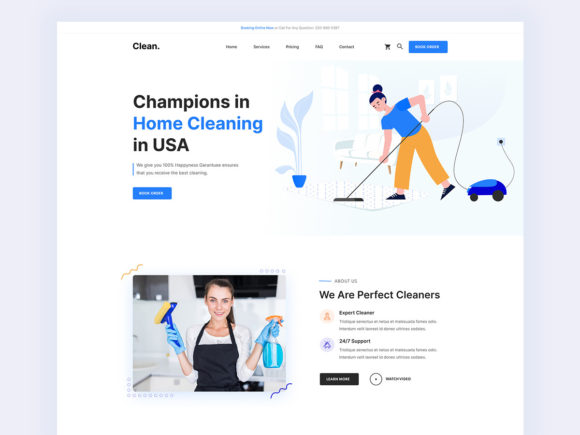
Consider the color choices often found in these premium templates. They typically lean towards whites, soft blues, greens, and crisp grays. These are not arbitrary decisions; they are rooted in color psychology. Blue conveys trust and reliability, green suggests eco-friendliness and health, and white represents purity and cleanliness. When these colors are combined with ample whitespace and clear, legible typography, the result is a user experience that feels refreshing rather than overwhelming. This visual language speaks directly to the consumer's desire for a stress-free solution to their cleaning needs.
Furthermore, the placement of elements within these templates is strategic. Key information—such as service areas, pricing structures, and booking capabilities—is positioned prominently to reduce friction in the decision-making process. The "Call to Action" buttons are not hidden; they are inviting and clear. This alignment with user intent demonstrates an understanding of the modern consumer's workflow. People do not want to hunt for information; they want immediate answers. A template that anticipates these needs and provides them effortlessly creates a seamless bridge between interest and conversion.
Broadening the Scope: Technology, Lifestyle, and Market Trends
The rise of sophisticated web templates for cleaning services is symptomatic of larger trends affecting the global economy and lifestyle sectors. We are witnessing the "professionalization" of the gig economy and traditional service trades. Freelancers and small business owners are increasingly adopting tools and strategies once reserved for large corporations. This democratization of high-quality design allows a solo entrepreneur to compete visually with established franchises. It levels the playing field, where the quality of one's digital presence can be just as impactful as the size of one's fleet.
Moreover, this trend intersects with the growing emphasis on sustainability and health-conscious living. Modern cleaning service templates often include dedicated sections for highlighting eco-friendly products, non-toxic cleaning methods, and health safety protocols. This responsiveness to consumer values is crucial. As society becomes more aware of environmental impact and indoor air quality, cleaning companies must communicate their adherence to these standards effectively. A flexible Cleaning Service Web Template allows businesses to showcase these differentiators prominently, aligning their brand with the values of their target demographic.
From a technological standpoint, these templates are built with mobile responsiveness as a core feature. The majority of service searches now occur on smartphones. A user looking for a cleaner while at work or commuting needs a site that loads instantly and functions perfectly on a small screen. The best templates ensure that images are optimized, forms are easy to fill out with a thumb, and navigation is intuitive regardless of the device. This adaptability is not just a technical requirement; it is a business imperative. Ignoring mobile optimization means ignoring a vast segment of the market.
Practical Applications and Workflow Enhancements
Let us explore how these design principles translate into practical business outcomes. Imagine a cleaning company specializing in post-construction cleanup. Their website, built on a robust Cleaning Service Web Template, features a gallery of before-and-after transformations, detailed case studies, and a streamlined quote request form. A property developer visits the site, impressed by the professional layout and the clarity of the information. Within minutes, they have submitted a request for a bid. The efficiency of the website has directly facilitated a high-value contract.
Similarly, consider a residential cleaning service targeting busy families. Their site utilizes a warm, inviting aesthetic with clear explanations of their background-check processes and insurance coverage. The booking system is integrated directly into the homepage, allowing parents to schedule a cleaning during their lunch break. The reduction in administrative back-and-forth saves time for both the business owner and the client. This integration of functionality and design streamlines operations, reduces overhead, and enhances customer satisfaction.
- Visual Credibility: High-quality imagery and consistent branding establish immediate trust.
- User-Centric Navigation: Intuitive menus guide visitors to exactly what they need without confusion.
- Mobile Optimization: Ensures accessibility for users on the go, capturing impulse bookings.
- Value Proposition Clarity: Clearly articulates unique selling points like eco-friendly practices or specialized equipment.
- Conversion Focus: Strategic placement of contact forms and call-to-action buttons drives lead generation.
The Future of Service Presentation
As we look forward, the distinction between "creative" industries and "service" industries will continue to blur. The expectation for high-quality digital experiences is becoming universal. A cleaning service is no longer just selling labor; they are selling peace of mind, time, and a healthier environment. The vehicle for communicating this value proposition is increasingly digital. The Cleaning Service Web Template is more than a static page; it is a dynamic tool for business growth.
For entrepreneurs and marketers, the lesson is clear: investing in a professional digital presence is not an optional extra; it is foundational. The feedback loop between design and business performance is tight. A well-designed site attracts higher-quality clients, commands better rates, and builds a brand reputation that withstands market fluctuations. The choice of colors, the hierarchy of information, and the overall user journey all contribute to the perceived value of the service.
In conclusion, the evolution of the Cleaning Service Web Template represents a microcosm of the broader digital transformation sweeping through traditional sectors. It highlights a shift towards greater professionalism, transparency, and user-centricity. For the creative minds designing these platforms and the business owners utilizing them, the opportunity is immense. By embracing these tools, the cleaning industry can shed its old stereotypes and emerge as a modern, tech-savvy, and highly respected sector. The clean UI is not just about looking good; it is about signaling a commitment to excellence in every aspect of the business, from the pixel on the screen to the sparkle on the floor.
As we continue to navigate this digital-first era, the synergy between creative design and practical service delivery will only deepen. Those who recognize the power of a well-crafted online presence will find themselves leading the pack, setting new standards for what consumers expect and deserve. The future of cleaning services is bright, clean, and undeniably digital.