Bringing the Coastline to Life: The Practical Power of Beach Rest and Activity Icons
There is a specific kind of visual language that instantly triggers a feeling of relaxation. When you see a stylized palm tree, a pair of flip-flops, or a simple outline of a sun hat, your brain immediately associates those shapes with warm sand, salty air, and a break from the daily grind. This is the essence of Elements of Beach Rest and Activity. While it might sound like a technical term for a graphic design asset, it represents something far more visceral for creators, marketers, and business owners: the ability to communicate a vibe without saying a word.
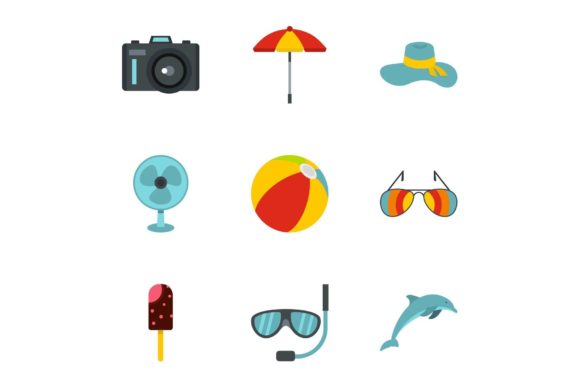
In the digital world, where attention spans are fleeting, these flat illustration vector icons serve as universal shorthand. They aren't just decorative; they are functional tools that help users navigate websites, understand service offerings, and emotionally connect with a brand. Whether you are building a landing page for a tropical resort, designing an app for surf forecasting, or creating a summer sale banner for a retail store, having a cohesive set of nine distinct elements can make the difference between a cluttered interface and a seamless user experience.
Why Flat Vector Icons Matter in Real-World Design
The shift toward flat illustration styles wasn't just an aesthetic trend; it was a response to the need for clarity across devices. When we talk about a set containing formats like JPG, EPS, AI, PSD, and PNG, we are talking about versatility. A web designer needs the PNG for quick implementation on a blog post, but a print specialist working on a large-format beach towel or a hotel brochure needs the scalability of an EPS or AI file. The "flat" style ensures that whether the icon is viewed on a 4K monitor or a budget smartphone screen, the message remains crisp and legible.
Consider the scenario of a travel agency updating their website for the summer season. They need to quickly convey what their packages include. Instead of writing long paragraphs explaining that a trip includes "sunbathing opportunities," "swimming gear," and "evening entertainment," they can deploy specific icons from an Elements of Beach Rest and Activity set. A sun lounger icon instantly communicates relaxation. A volleyball net suggests active fun. A cocktail glass hints at nightlife. This visual clustering allows potential customers to scan information rapidly, making the decision-making process smoother and more enjoyable.
Diverse Applications Across Industries
The utility of these nine elements extends far beyond the travel industry. Let's look at how different sectors leverage these visuals to solve practical problems.
- Health and Wellness Apps: Fitness trackers often struggle to make exercise look inviting. By incorporating icons representing beach yoga, swimming, or walking along the shore, developers can frame physical activity as a restorative experience rather than a chore. The psychological association with "beach rest" lowers the barrier to entry for users looking to start a summer fitness routine.
- E-Commerce and Retail: Fashion brands launching summer collections use these icons to categorize products. A filter system using a sunglasses icon, a swimsuit icon, and a sandal icon is more intuitive than text dropdowns. It creates a thematic shopping environment that keeps the user immersed in the seasonal mood.
- Event Planning: Wedding planners specializing in destination weddings use these vectors in their digital invitations and itineraries. An icon set helps visualize the schedule: a sunrise icon for the ceremony, a fork and knife for the reception, and a music note for the party. It adds a layer of professionalism and thematic consistency that generic clipart simply cannot achieve.
- Real Estate: Agencies marketing coastal properties rely heavily on lifestyle imagery. On property listing sites, where space is premium, icons indicating "beach access," "poolside lounging," or "water sports nearby" provide immediate value propositions to buyers scanning hundreds of listings.
Navigating File Formats and Technical Considerations
When choosing a resource like this, understanding the file formats is crucial for avoiding headaches down the road. You might be tempted to just grab the JPG and move on, but that limits your future flexibility. JPGs are great for immediate use on social media, but they have a white background and lose quality when resized.
For web developers, the PNG format is often the go-to because it supports transparency, allowing the icon to sit seamlessly on colored backgrounds or over photographs. However, the real power lies in the vector files (AI, EPS, SVG). If you need to change the color of the "beach ball" icon to match your brand's specific shade of teal, or if you need to enlarge the "surfboard" icon for a billboard without it becoming pixelated, the vector source files are non-negotiable. The inclusion of PSD files is also a significant bonus for designers who want to add shadows, textures, or blend modes to integrate the flat icons into more complex, photorealistic compositions.
One common consideration before applying these elements is consistency. A set of nine elements is curated to ensure that the line weight, color palette, and stylistic approach are uniform. Mixing icons from different sources often results in a disjointed look that can subtly erode trust in a brand. Sticking to a single, well-designed set ensures that the "sun" looks like it belongs in the same sky as the "palm tree."
The Psychology of Summer Visuals
Why do these specific elements work so well? It comes down to the universal desire for escape. For adults aged 20 to 50, who often juggle careers, families, and financial responsibilities, the concept of "beach rest" represents a tangible goal. These icons act as micro-doses of that aspiration. When a user sees a well-crafted icon of a hammock or a cooling drink, it triggers a positive emotional response. This is not just about decoration; it is about emotional engagement.
In user interface (UI) design, this emotional connection can reduce bounce rates. If a booking platform feels sterile and corporate, users may hesitate. If the interface incorporates warm, inviting elements of beach activity, the friction of the transaction decreases. The user feels they are already part of the experience, not just buying a product.
Limitations and Best Practices
While versatile, flat icons do have limitations. They rely on simplicity, which means they cannot convey highly complex narratives. An icon can show "swimming," but it cannot explain the safety protocols of a specific beach. Therefore, these elements should always be used to support content, not replace necessary information. They are the accent marks in the sentence of your design, not the whole paragraph.
Furthermore, accessibility remains a key factor. While humans recognize the image of a shovel and bucket as "play," screen readers for the visually impaired cannot interpret the image alone. Always ensure that when implementing these Elements of Beach Rest and Activity on the web, proper alt text is added. Describe the function of the icon, not just its appearance. Instead of alt="blue bucket," use alt="icon indicating children's play area."
Making the Most of Your Assets
Ultimately, acquiring a high-quality set of vector icons is an investment in efficiency and brand cohesion. It saves hours of custom illustration time and provides a professional polish that elevates the perceived value of your project. Whether you are a freelancer pitching a new client, a marketer launching a campaign, or a developer building the next big travel app, these nine elements offer a foundational toolkit. They bridge the gap between abstract concepts of leisure and concrete digital interactions, turning a standard webpage into a portal for summer dreams.
By understanding the strengths of flat design, the necessity of scalable vector formats, and the psychological impact of coastal imagery, you can deploy these assets strategically. The goal isn't just to make things look pretty; it's to create a digital environment where users feel invited to relax, explore, and engage. That is the true power of thoughtful iconography.