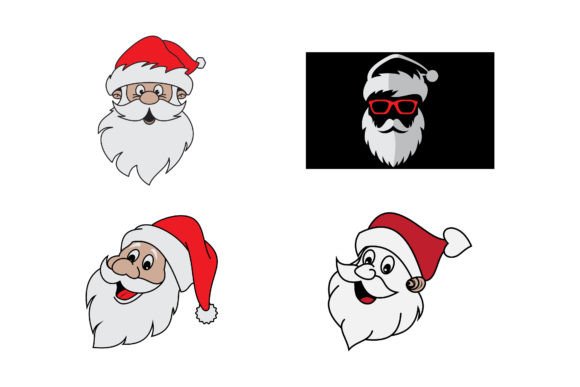
Integrating the Santa Claus Logo into Professional Holiday Workflows
The integration of seasonal imagery into professional branding and marketing campaigns requires more than simply selecting a festive picture. When incorporating a Santa Claus logo or related holiday iconography into a business workflow, the process demands strategic planning, asset management, and a clear understanding of how these visual elements interact with your existing brand identity. For professionals ranging from marketers and entrepreneurs to content creators and small business owners, the deployment of Christmas-themed graphics is a timed operation that spans preparation, execution, and post-campaign analysis.
A Santa Claus logo serves as a powerful semiotic tool. It instantly communicates themes of generosity, celebration, tradition, and warmth. However, treating it as a mere decoration undermines its potential impact. In a practical workflow, this asset functions as a central node connecting various deliverables such as social media banners, email headers, product packaging, and internal communications. The effectiveness of the campaign often hinges on how seamlessly this symbol is woven into the broader visual language of the organization without compromising brand consistency.
Strategic Selection and Asset Preparation
The first phase of any holiday project involves the careful selection of the appropriate graphic style. The market offers an overwhelming variety of options, ranging from vintage and retro illustrations to modern, flat design vectors and 3d renders. Choosing the right style is not an aesthetic whim; it is a decision rooted in audience alignment and brand voice. A law firm might opt for a subtle, linear outline or a sophisticated typography-based badge, whereas a gaming community or esports team might leverage a funky, colorful, or even punk-styled mascot to resonate with their specific demographic.
Once the style is determined, the technical preparation of the asset becomes critical. Professionals must ensure they are working with high-resolution vector files (such as SVG or EPS) rather than rasterized images whenever possible. Vectors allow for infinite scalability, ensuring the logo remains crisp whether it is printed on a massive outdoor banner or displayed as a tiny favicon on a mobile device. This step prevents quality control issues later in the production pipeline. Furthermore, verifying the licensing terms is essential to avoid legal complications, especially when using assets sourced from stock libraries or independent artists.
Organization is key during this stage. Establish a dedicated folder structure within your digital asset management system. Categorize files by format, color variation (e.g., full color, monochrome, inverted), and usage rights. This systematic approach saves valuable time when multiple team members need access to the files during the intense holiday rush. Having a "ready-to-go" library of isolated elements, such as separate layers for the hat, beard, or gift box, allows for greater flexibility in customizing designs for different platforms.
Integration Across Marketing Channels
With assets prepared, the focus shifts to deployment across various channels. A cohesive holiday strategy ensures that the Santa Claus logo appears consistently but appropriately adapted for each medium. In email marketing, the logo can serve as a header element to immediately set the festive tone. Here, file size optimization is crucial to ensure fast loading times, which directly impacts open rates and user engagement. Pairing the icon with compelling lettering or a clear call-to-action creates a unified message that drives conversions.
On social media platforms, the logo acts as a visual anchor for campaigns. It can be used as a profile picture frame, a watermark on video content, or a central element in carousel posts highlighting gift guides or special offers. For businesses engaging in esports or gaming tournaments, integrating a themed mascot logo can foster community spirit and increase participation in seasonal events. The key is adaptation; a complex illustration suitable for a poster may need to be simplified into a bold icon or badge for smaller mobile screens.
Physical merchandise and packaging present another layer of complexity. When applying the design to clothing, bags, or product boxes, consider the printing method. Screen printing, embroidery, and digital printing all have different requirements regarding color counts and line thickness. A grunge texture might look excellent on a digital flyer but could lose definition when embroidered on a wool hat. Collaborating early with printers and suppliers ensures that the final physical product matches the digital proof, maintaining the integrity of the design.
Adapting to Contemporary Contexts and Sensitivity
In recent years, the context in which holiday symbols are used has evolved. Professionals must remain sensitive to global events and cultural shifts. For instance, during periods of health crises, creative adaptations emerged where traditional figures were depicted wearing surgical masks or practicing social distancing. While such trends may seem dated now, they highlight the importance of contextual relevance. Today, the focus might shift toward inclusivity, sustainability, or digital connection. Ensuring that your use of a Santa Claus logo feels authentic to the current moment rather than tone-deaf is a vital part of the planning process.
Moreover, the balance between traditional and modern interpretations allows brands to signal their values. A hipster or minimalist take on the character might appeal to a younger, design-conscious audience, while a classic, folklore-inspired depiction resonates with those seeking nostalgia. Understanding these nuances helps in tailoring the visual narrative to specific customer segments. It is also important to respect the spiritual roots of the holiday for some audiences while maintaining a secular, celebratory vibe for others, depending on your brand's positioning.
Workflow Efficiency and Collaboration
Efficient collaboration is the backbone of successful seasonal campaigns. Using cloud-based design tools allows teams to review and edit assets in real-time. Comment threads on specific design elements—such as adjusting the curvature of a sleigh or the shade of red in the suit—streamline the feedback loop. Version control is equally important; clearly labeling iterations prevents the accidental use of outdated drafts in final publications.
Automation tools can further enhance efficiency. Scheduling software enables the pre-loading of social media posts featuring the holiday logo, ensuring consistent visibility without manual intervention during busy periods. Similarly, template systems for internal documents or client proposals can include the seasonal branding as a default option, reducing the workload on design teams. By embedding the Santa Claus logo into these templates, organizations maintain a unified front with minimal friction.
Post-Campaign Analysis and Archiving
The workflow does not end when the holiday season concludes. A crucial, often overlooked step is the analysis of performance metrics. Did the inclusion of the festive logo increase click-through rates? Did it enhance brand sentiment? Gathering this data informs future strategies. If a specific style of illustration performed better than another, that insight becomes a guiding principle for the next year's planning.
Finally, proper archiving ensures long-term usability. Store the final approved assets along with the source files and a brief report on their performance. Tagging these files with relevant metadata such as "2024 Campaign," "Winter Sale," or "Community Event" makes them easily retrievable for future reference. This practice builds a valuable repository of intellectual property that can be repurposed or iterated upon, saving resources in subsequent years. Whether it is a simple stamp graphic or a complex infographic series, treating these elements as enduring assets maximizes their return on investment.
In conclusion, the use of a Santa Claus logo extends far beyond simple decoration. It is a strategic component of a larger operational framework that involves careful selection, technical preparation, multi-channel integration, and thoughtful analysis. By approaching this process with the same rigor applied to core business functions, professionals can harness the emotional power of holiday symbolism to drive engagement, foster community, and achieve tangible business goals. The result is a campaign that feels both timely and timeless, executed with precision and creativity.