Elevating Digital Depth: The Strategic Role of Shadow Dividers and Realistic Web Elements
In the rapidly evolving landscape of digital design, the pendulum often swings between stark minimalism and rich immersion. Recently, a significant shift has occurred toward interfaces that feel tangible, layered, and physically grounded. At the heart of this movement are Shadow Dividers and Realistic Web Elements. These are not merely decorative assets; they are functional tools that redefine how users perceive hierarchy, depth, and interaction on the web. For professionals, creators, and entrepreneurs navigating the competitive digital marketplace, understanding the utility of these elements is no longer optional—it is essential for crafting experiences that resonate with modern user expectations.
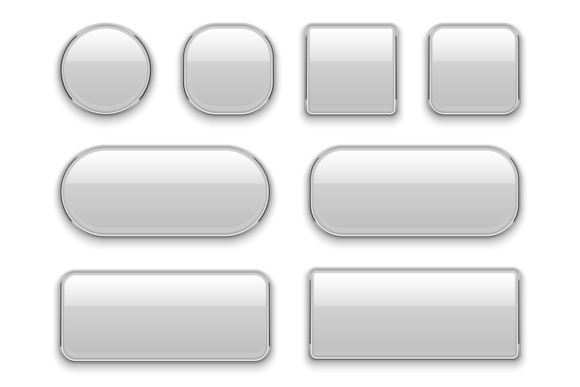
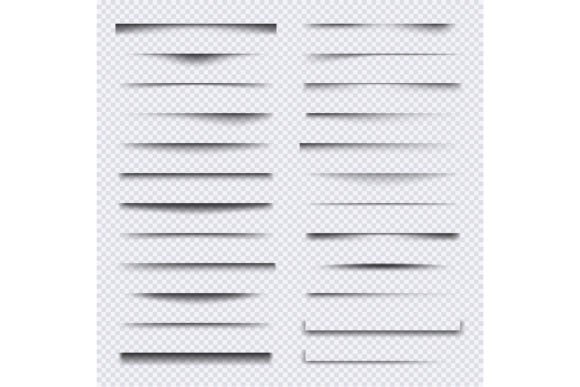
When we discuss Shadow Dividers. Realistic Web Elements, we are referring to a sophisticated collection of vector-based assets designed to simulate light, shadow, and physical separation within a two-dimensional space. Unlike the flat dividers of the early 2010s, these elements utilize soft shadows, overlay effects, and illustration border techniques to create a sense of elevation. They act as the invisible architecture of a webpage, guiding the eye without demanding attention, yet providing the necessary structure to make content digestible.
The Return of Tactility in a Flat World
For nearly a decade, "flat design" dominated the industry. While effective for loading speeds and clarity, an over-reliance on flatness eventually led to interface fatigue. Users began craving interfaces that felt more organic and responsive. This is where the broader industry trend toward neumorphism and soft UI intersects with practical utility. The demand for Shadow Dividers is a direct response to the human desire for tactile feedback in a digital environment.
Consider the psychological impact of a soft shadow overlay. When a card or a section of text appears to float above the background, it instinctively signals importance. It mimics the physical world where objects closer to the light source cast distinct shadows. By integrating Realistic Web Elements frames, designers can establish a clear visual hierarchy without resorting to harsh lines or contrasting colors that might disrupt brand harmony. This subtle use of depth allows entrepreneurs and marketers to highlight key value propositions, calls to action, or testimonial sections with a level of sophistication that flat borders simply cannot achieve.
Adapting to Changing Workflow Expectations
The relevance of these assets extends beyond aesthetics; it addresses changing workflows and production expectations. In the past, creating realistic shadows and custom dividers required hours of manual work in raster-based software, often resulting in non-scalable graphics that looked pixelated on high-resolution displays. Today, the availability of comprehensive vector sets, such as those including EPS files, has democratized high-fidelity design.
Professionals now expect assets that are:
- Scalable: Vector formats ensure crisp edges on everything from mobile screens to 4K monitors.
- Customizable: The ability to tweak opacity, blur radius, and color directly within design software.
- Efficient: Pre-made realistic frames and dividers reduce development time, allowing teams to focus on strategy and content rather than reinventing the wheel.
This shift reflects a larger development in the creative economy: the prioritization of speed-to-market without sacrificing quality. Freelancers and agencies alike are under pressure to deliver premium results quickly. Utilizing a curated set of Shadow Dividers. Realistic Web Elements allows for rapid prototyping and iteration, ensuring that the final product feels polished and professional from day one.
Bridging the Gap Between Brand and User
In the context of marketing and consumer trends, trust is the ultimate currency. A website that looks dated or generic can inadvertently signal a lack of attention to detail, potentially eroding consumer confidence. Conversely, a site that utilizes nuanced lighting and realistic layering suggests a brand that cares about the user experience.
Take, for instance, the use of an illustration border effect combined with a soft shadow. This combination can frame a complex data visualization or a delicate product photograph, isolating it from the surrounding noise. It creates a "stage" for the content, forcing the user to focus on what matters. For e-commerce entrepreneurs, this could mean the difference between a user scrolling past a product and stopping to examine it. The shadow acts as a subtle cue, saying, "Look here; this is important."
Furthermore, as dark mode becomes a standard preference for many users, the behavior of shadows changes. A black shadow on a dark background disappears, rendering traditional dividers useless. Modern realistic web element sets are increasingly designed with this versatility in mind, offering overlay effects that work harmoniously across different color schemes. This adaptability is crucial for businesses aiming to provide an inclusive and comfortable viewing experience for all demographics.
Practical Applications in Modern Design
To understand the true power of these elements, one must look at their practical application. They are not intended to be used indiscriminately; rather, they serve specific functional roles within a layout.
- Content Segmentation: Instead of using a solid horizontal rule (
- Card Interfaces: In dashboard designs or portfolio grids, realistic frames with inner shadows can make individual cards appear recessed or elevated, indicating interactivity. This improves usability by making clickable areas obvious.
- Modal and Overlay Focus: When a pop-up or modal window appears, a heavy shadow overlay on the background content pushes it back visually, while the modal itself, framed with a crisp, realistic border, pops forward. This directs user attention immediately to the task at hand.
These applications demonstrate that Shadow Dividers. Realistic Web Elements are foundational to user interface (UI) logic. They solve problems related to clutter and confusion by introducing spatial relationships that the human brain processes instantly.
The Technical Advantage of Vector Precision
A critical aspect of adopting these tools is the technical format in which they are delivered. The mention of receiving a ZIP folder containing EPS files is significant. EPS (Encapsulated PostScript) is a legacy yet robust vector format that ensures compatibility across a wide range of design software, from Adobe Illustrator to CorelDRAW.
For the tech-savvy creator, this means total control. Unlike PNGs with pre-baked shadows that might look muddy when resized, vector-based shadow dividers allow for the mathematical adjustment of curves and gradients. You can expand the appearance of a shadow to make it softer for a luxury brand aesthetic or sharpen it for a more corporate, structured look. This level of granularity is what separates amateur designs from professional-grade outputs.
Moreover, because these elements are vectors, they contribute less to the overall page weight compared to high-resolution raster images, provided they are implemented correctly (often converted to SVG for the web). This aligns with the industry's relentless push for performance optimization. Google's Core Web Vitals prioritize loading speed, and using efficient vector graphics for decorative elements like dividers and frames is a smart strategy for maintaining high performance scores while achieving high visual fidelity.
Future-Proofing Your Digital Presence
As we look toward the future of web design, the line between the physical and digital continues to blur. With the rise of augmented reality (AR) and spatial computing, the principles of light and shadow become even more critical. Designers who master the art of Realistic Web Elements today are building the skill set required for tomorrow's immersive interfaces.
The current trend is not about returning to the skeuomorphism of the early 2000s, where buttons looked like glossy gel candies. Instead, it is about "functional realism." It is about using shadows to denote elevation, using borders to define boundaries, and using overlays to create focus. It is a mature evolution of design language that respects the user's intelligence while enhancing their experience.
For the entrepreneur launching a new platform, the marketer revamping a campaign landing page, or the freelancer building a personal brand, ignoring these nuances is a missed opportunity. The details matter. A well-placed shadow divider can guide a user's journey through a narrative; a realistic frame can elevate a simple quote into a powerful testimonial. These elements are the silent ambassadors of your brand's quality.
In conclusion, the integration of Shadow Dividers. Realistic Web Elements represents a convergence of artistic expression and functional necessity. They address the modern user's need for clarity, depth, and engagement. By leveraging these tools—available in versatile formats like EPS within convenient ZIP archives—creators can build digital environments that are not only visually stunning but also intuitively navigable. As the web continues to evolve, those who embrace the subtle power of light and shadow will find themselves leading the pack, delivering experiences that feel as real and impactful as the physical world they emulate.
Whether you are refining a corporate identity or experimenting with a new creative direction, remember that the devil—and the delight—is in the details. Embrace the depth, utilize the vectors, and let your designs cast the right shadow on your audience.