Unleashing Retro Futurism: A Comprehensive Guide to the Memphis Design Elements Set
The visual landscape of modern digital media is currently experiencing a vibrant renaissance, driven by a nostalgic yet forward-looking aesthetic known as Memphis design. Originating in the early 1980s in Milan, this style challenged the strict minimalism of the previous decade with bold colors, chaotic patterns, and playful geometry. Today, designers, marketers, and content creators are increasingly turning to a Memphis Design Elements Set to inject energy and personality into their projects. Whether you are crafting a vintage advertisement, a trendy web banner, or a high-impact billboard, understanding how to leverage these abstract geometric shapes is essential for creating work that stands out in a crowded marketplace.
The Anatomy of Modern Memphis Aesthetics
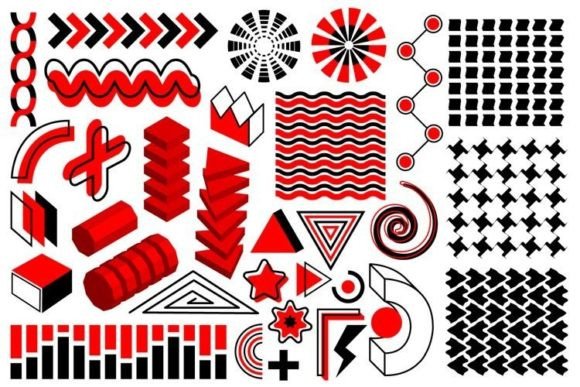
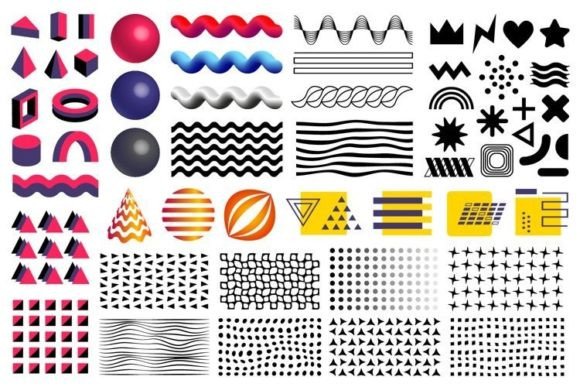
At the heart of this design movement lies a specific vocabulary of forms. A robust collection of Memphis abstract geometric shapes typically includes spheres, triangles, squiggles, and distinct dot patterns. These are not merely decorative; they serve as the building blocks for composition. When utilizing a professional elements set, you will often encounter a mix of flat and 3D rendering design elements. The flat variants offer a clean, graphic look ideal for user interfaces and iconography, while the 3D rendered spheres and cylinders add depth and tactile realism, bridging the gap between retro nostalgia and contemporary digital trends.
One of the most defining characteristics of this style is the use of texture within geometry. Halftones and waves are frequently integrated into triangles and circles to create visual interest without cluttering the layout. These textures mimic the printing techniques of the past, adding a layer of authenticity to digital creations. For instance, a simple triangle becomes dynamic when filled with a gradient halftone pattern, making it suitable for everything from a sale leaflet to a complex album cover. The interplay between solid colors and these textured overlays creates a rhythm that guides the viewer's eye across the design.
Technical Specifications and File Versatility
For professionals working across various mediums, the utility of a design asset library depends heavily on its technical specifications. A high-quality Memphis design, retro elements package must cater to both print and digital workflows. This necessitates a diverse range of file formats. Typically, a comprehensive set includes JPG files in HI resolution, often boasting a density of 300 ppi. These are indispensable for physical applications such as posters, billboards, and leaflets where pixelation can ruin the final product. With roughly 57 included images in this format, designers have a substantial library to draw from for immediate deployment.
However, the true power of a modern elements set lies in its vector capabilities. To ensure scalability without loss of quality, the inclusion of SVG, AI, and EPS files is critical. SVG (Vector graphics) are particularly vital for web design, allowing shapes to remain crisp on any screen size, from mobile phones to ultra-wide monitors. Meanwhile, AI files provide native compatibility for Adobe Illustrator, enabling deep customization of anchor points and paths. For users of Corel Draw or other vector-based software, EPS vector files ensure cross-platform flexibility. Having access to 57 vector items allows a creator to deconstruct and rebuild shapes, altering colors to match specific brand guidelines while maintaining the integrity of the original geometric form.
Furthermore, workflow efficiency is significantly enhanced by the inclusion of PNG files with transparent backgrounds. In fast-paced environments like social media management or rapid prototyping for advertisements, the ability to drag and drop a pre-rendered 3D sphere or a patterned wave directly onto a canvas saves hours of manual masking. These PNGs, also provided at 300 ppi, ensure that even when used in composite images, the edges remain sharp and professional.
Strategic Applications in Advertising and Marketing
The application of Memphis design extends far beyond artistic expression; it is a potent tool for communication and conversion. In the realm of advertisement and banner creation, the bold nature of these shapes commands attention. A sale promotion, for example, benefits immensely from the high-energy vibe of scattered triangles and vibrant dots. These elements break the monotony of standard corporate layouts, signaling to the consumer that the offer is exciting and urgent.
Consider the context of a poster or billboard. These large-format mediums require designs that are legible from a distance yet interesting up close. The large-scale geometry found in a Memphis abstract geometric shapes collection fits this requirement perfectly. A massive 3D-rendered wave can serve as a background motif that frames the primary message, while smaller halftone patterns add texture to the negative space. This layering technique prevents the design from feeling empty while ensuring the core message remains the focal point.
In the digital sphere, these elements are equally effective for web and vintage-styled landing pages. Web designers often use these assets to create section dividers or background patterns that add character without overwhelming the text. The "retro" aspect appeals to a broad demographic, evoking a sense of fun and approachability that sterile, ultra-modern designs sometimes lack. For business owners looking to refresh their brand identity, incorporating these trendy halftone vector geometric shapes can signal a shift towards a more creative and customer-centric philosophy.
Bridging the Gap Between Flat and 3D Realms
A unique advantage of contemporary Memphis asset packs is the seamless integration of flat and 3D rendering design elements. Historically, the original Memphis group worked primarily in two dimensions. However, modern interpretations have embraced three-dimensional modeling to update the look for the current era. This duality allows creators to choose the aesthetic that best suits their project's tone.
Flat design elements are ideal for infographics, educational materials, and interface icons where clarity is paramount. They reduce cognitive load, allowing the audience to process information quickly. Conversely, 3D elements bring a sense of tangibility and luxury. A 3D sphere with realistic lighting and shadows can elevate a simple logo or act as a hero image for a product launch. By having both styles available in a single Memphis Design Elements Set, designers can maintain visual consistency across different touchpoints while adapting the dimensionality to the specific medium.
The transition between these styles can also be used creatively within a single piece. A leaflet might feature a flat patterned background to keep printing costs low and readability high, while using a single 3D element as a focal point to draw the eye. This hybrid approach demonstrates a sophisticated understanding of design principles, leveraging the strengths of both aesthetics to create a cohesive visual narrative.
Optimizing Workflows for Diverse Creators
The utility of these design sets spans a wide array of users, from educators and researchers creating engaging presentation slides to hobbyists designing invitations for personal events. The key to maximizing the value of a 57-item collection lies in organization and adaptability. Because the files are provided in multiple formats (JPG, PNG, SVG, AI, EPS), the barrier to entry is low. A user with basic knowledge of word processing software can utilize the high-res JPGs, while a seasoned graphic artist can manipulate the AI vectors for complex compositions.
For content creators focusing on social media, the speed of production is often the limiting factor. The availability of transparent PNGs allows for the rapid assembly of stories, posts, and thumbnails. The distinctive look of Memphis abstract geometric shapes helps in establishing a recognizable brand identity. When an audience repeatedly sees a specific combination of waves, dots, and triangles associated with a creator, it builds brand recall. This consistency is easier to achieve when working from a unified set of assets rather than sourcing disparate elements from various locations.
Moreover, the trendy halftone vector geometric shapes included in such sets are particularly relevant for industries looking to appear innovative. Tech startups, fashion brands, and creative agencies often adopt this style to differentiate themselves from competitors who rely on safe, conservative imagery. The inherent playfulness of the style suggests a company that is confident, creative, and unafraid to break rules—a powerful message in today's competitive business environment.
Considerations for Implementation and Longevity
While the Memphis style is undeniably popular, effective implementation requires a nuanced approach. Overuse of bright colors and chaotic patterns can lead to visual fatigue. The most successful designs use these retro elements strategically, employing white space to let the geometry breathe. The goal is to create a balance where the spheres, dot patterns, and waves enhance the message rather than distract from it.
Additionally, color theory plays a pivotal role. Traditional Memphis palettes involve clashing neon hues, but modern adaptations often soften these into pastels or restrict the palette to monochrome with a single accent color to suit more corporate or subdued contexts. The versatility of vector files allows for this easy recoloring, ensuring the assets remain useful regardless of shifting color trends.
The longevity of a design project often depends on the quality of its foundational assets. Investing in a high-resolution, multi-format set ensures that designs created today will remain viable for years. As display technologies improve and print standards evolve, having access to 300 ppi sources and scalable vectors future-proofs the creative work. Whether the output is a digital banner or a physical billboard, the underlying quality of the Memphis Design Elements Set determines the professionalism of the final result.
In conclusion, the resurgence of Memphis design offers a rich toolkit for anyone involved in visual communication. By combining the nostalgic charm of the 1980s with modern rendering techniques and versatile file formats, these collections empower users to create dynamic, engaging, and memorable visuals. From the precise control offered by AI and EPS vectors to the immediate usability of high-res PNGs and JPGs, a well-curated set of geometric shapes serves as an invaluable resource. As the demand for distinctive and expressive design continues to grow, mastering the application of these abstract elements will remain a crucial skill for professionals and enthusiasts alike.